



















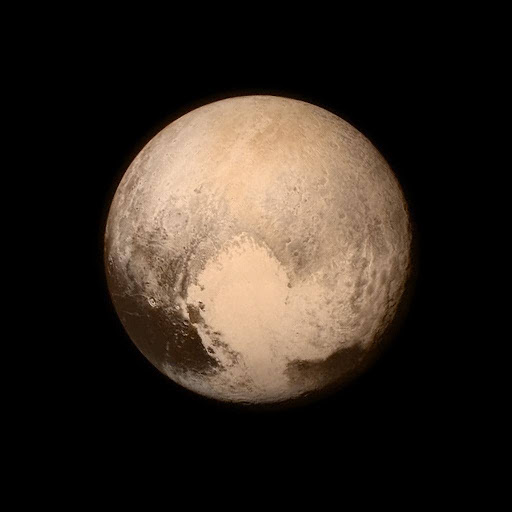
In 2006, the International Astronomical Union made the controversial decision to change Pluto from a planet to a dwarf planet. Even twenty years later, people still debate whether Pluto should be considered a planet. Even though Pluto is no longer one of the main planets in our solar system, it is still one of the most interesting and studied objects in space. Pluto continues to interest scientists and space lovers around the world.
What classifies a dwarf planet is a celestial body that orbits the sun, has enough mass to form a round shape, but has not cleared its orbital path of other debris. Pluto is located in the Kuiper Belt, which is right outside Neptune’s orbital path. Pluto’s orbital path is tilted compared with the orbits of the planets, and at certain points, Pluto can be closer to the sun than Neptune.
There are three tests a celestial body has to pass to be considered a planet, and Pluto passes two of the three, according to the International Astronomical Union. First, it has to orbit the sun. Pluto does orbit the sun, but its orbital path is tilted. Second, it has to be a round shape, and photos of Pluto show its round shape. The last is that its orbital path has to be cleared of debris. This is the test Pluto failed because its gravitational pull is not strong enough to clear other objects from the area around its orbit.
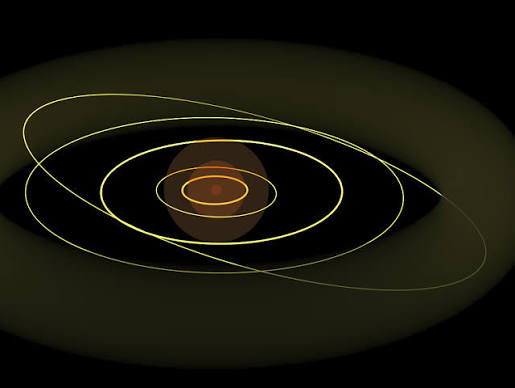
Something else to note is that the Kuiper Belt, which is right outside Neptune’s orbit, is full of space debris and large ice chunks. Pluto’s surface is made of rock and ice. When it was part of the planets, it was the smallest one.
A fun fact about Pluto is that it was named by an 11-year-old girl from England named Venetia Burney. She got the name from the Roman god of the underworld, Pluto, because the underworld is known for being cold and dark. According to NASA, Burney suggested the name after the discovery of Pluto in 1930.
Another fun fact about Pluto is that one year on Pluto is 248 Earth years. That means Pluto will not finish its first full orbit since it was discovered in 1930 until 2178.Even though Pluto is no longer considered one of the main planets in our solar system, it is still an interesting part of space. With its unusual orbit, icy surface and place in the Kuiper Belt, there is still a lot for scientists to learn about Pluto. Whether people consider it a planet or a dwarf planet, Pluto continues to capture the attention of people around the world.