















“What George Orwell feared were those who would ban books. What Aldous Huxley feared was that there would be no reason to ban a book because there would be no one who wanted to read one.” – Neil Postman, Amusing Ourselves to Death
The reading revolution began with the printing press, an invention of Johannes Gutenberg in the 1400s. This revolution was known as the spark that led to the expansion of books and knowledge. We as a society have entered something called a counter revolution, or in other words, a post-literate society. Proof of this decline in reading has been shown in America’s reading record. Over the past twenty years, America’s rate of reading for pleasure has fallen to one of its lowest points. Many people assume, why read a book when it has been converted into a podcast, a movie, or a thirty-second TikTok summarization for you? If the reading revolution expanded knowledge for everyone, then the screen age often feels like it’s stealing that knowledge away.
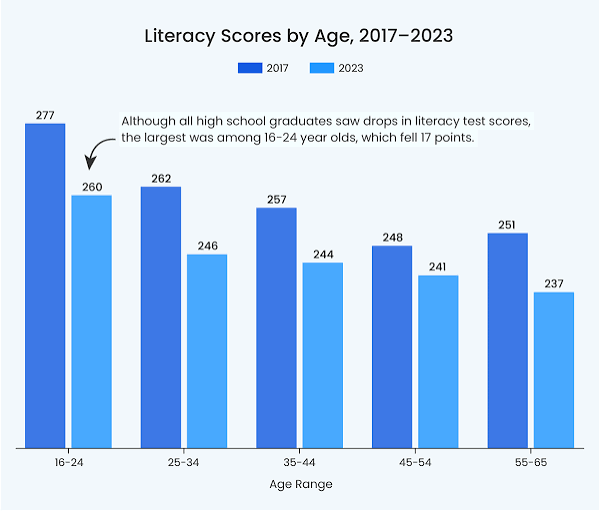
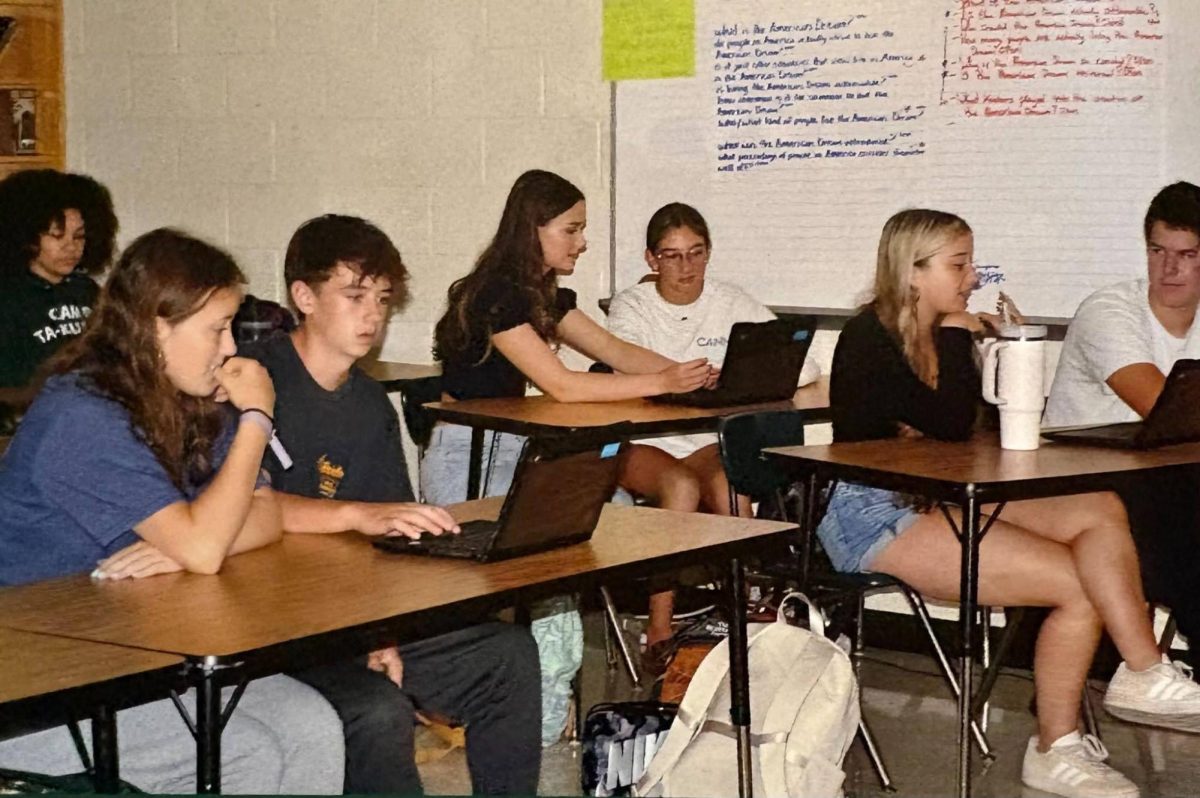
Most students in schools are not instructed to use textbooks anymore; instead, the work comes on printout sheets or through online submissions. This leaves students behind in reading. Students that are more reliant on provided instructions are less capable of racing ahead, developing new ideas on topics, and questioning concepts. The lack of reading in a classroom is just one symptom of the declining literacy rate as more information is delivered through screens, which makes topics seem overly simplified. Classics are not taught in classrooms as often as they used to be because screens have shortened attention spans and restricted vocabulary growth. Great works of writers can no longer reach students as easily because students are losing the ability to understand them.
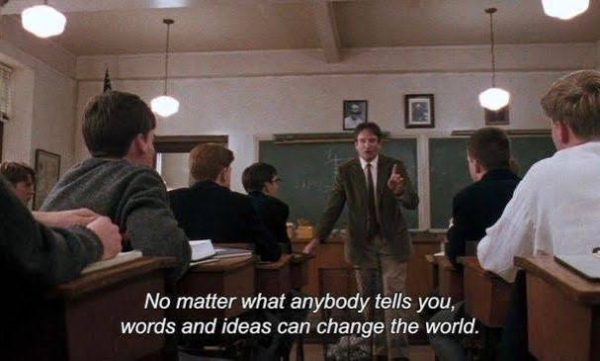
Matthew Arnold said that “The best that has been thought and said are in the classics.” This may be a slight contradiction to my previous statement, but a great movie taught me that stories don’t just live on screen; they live in the margins of a book. I have always loved reading, but my true love for understanding how to read and write came from the book and movie adaptation of Dead Poets Society. The movie shows how poetry and literature can break through and inspire students to think independently. Its Latin quote, “carpe diem,” or “seize the day,” was a calling to me to seize the power of words and books.
For me, this ignited a passion for understanding how to read and write. I was so inspired that I tracked down an online copy and analysis of Whitman’s Leaves of Grass. If you ever feel that spark after a book adaptation or summarization, don’t let it die there. Find the source, read the book, and write how it makes you feel. The world needs more knowledgeable voices, not just adaptations.
“I am saying then, that literacy, the mastery of language and the knowledge of books is not an ornament but a necessity. It is impractical only by the standards of quick profit and easy power. A longer perspective will show that it alone can preserve in us the possibility of an accurate judgement of ourselves and the possibilities of correction and renewal. Without it, we are adrift in the present, in the wreckage of yesterday, in the nightmare of tomorrow.” – Wendell Berry, “In Defense of Literacy”
If you take anything from this last quote, let it be this: reading is not just a hobby but a mental skill. Literacy is not just about figuring out what certain words mean or understanding the plot of a book, but it’s about claiming your power to think, judge, and create.